CEO Journal 002: Why Writing Is Part of Building Roundi
Clarity, documentation, and the quiet work behind building
David Kuria
A few weeks ago, I was talking to a friend who works in animation and video production. The kind of conversation you have casually, half ideas, half banter. Then he said something that landed heavier than he probably intended:
“Blogs don’t really matter anymore. Video does.”
For about three seconds, everything went quiet in my head.
Not dramatic silence. Just that uncomfortable pause where a thought sneaks in and asks a dangerous question:
Have I been wasting my time?
I’ve written a lot over the years. Blog posts. Notes. Half-finished ideas. Things that don’t get many reads. In that moment, I genuinely wondered if all of that effort had been misplaced.
Then, almost immediately, my brain went into defense mode.
I started assembling arguments. Something about GEO, Generative Engine Optimization. Something about how AI systems still rely heavily on written content. How text is structured, indexable, reusable. All technically true.
But underneath all that logic, there was a quieter realization:
I actually hadn’t fully answered the most important question.
Why do I write?
And if I couldn’t answer that honestly, then maybe I should be spending my time differently—especially now, while building Roundi.
After COVID, my brain wasn’t the same.
Simple things felt harder than they should have been. Writing with a pen, something I’d done all my life, suddenly required effort. Filling out forms felt slow, almost clumsy.
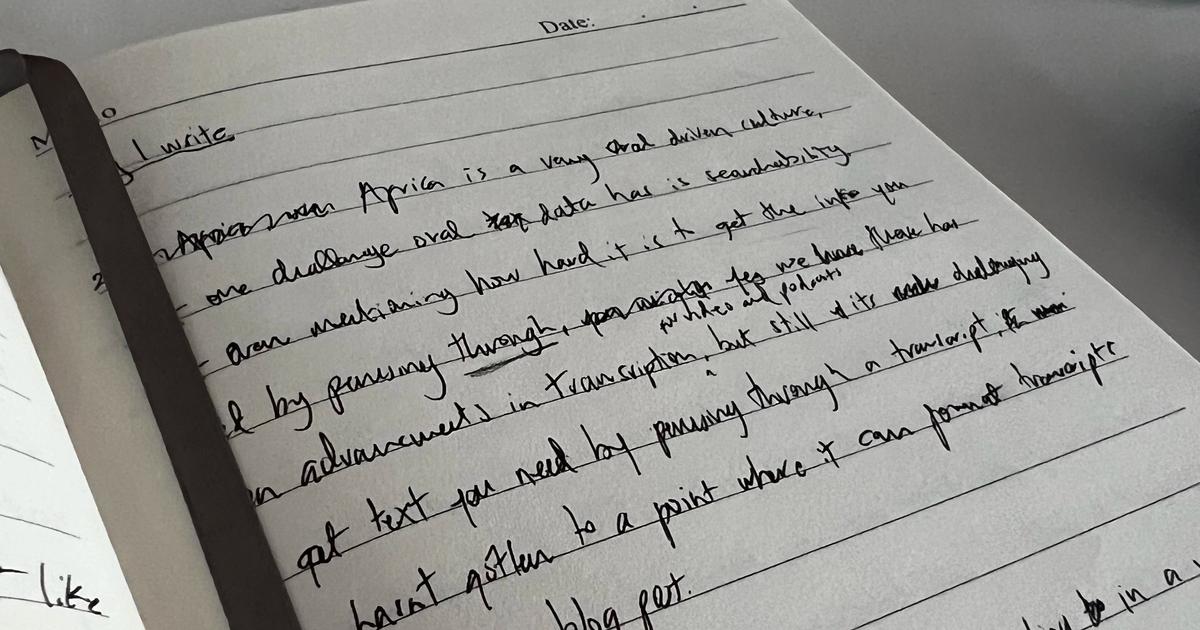
In November, I bought a notebook.
Not for productivity. Not for content. Just to write again. By hand. Messy sentences. Unfinished thoughts.
I know I’m not a great writer. I also know not many people read what I write. For a long time, I treated writing like background noise, something I did while the “real work” happened elsewhere. Design. Strategy. Direction.
But somewhere along the way, that changed.
Without fully noticing, writing stopped being busywork and became intentional.
I started writing for myself first.
Here’s what I’ve learned since then: clarity attracts people.
Not hype. Not polish. Clarity.
When you can articulate an idea clearly, you invite people into it. You make it easier for others to see what you’re seeing, and decide whether they want to walk with you.
A lot of African cultures are beautifully oral. Stories passed down through conversation. Knowledge shared in rooms, not documents. That’s powerful.
But oral knowledge is hard to search.
Hard to reference.
Hard to build on systematically.
Even with podcasts, videos, and transcripts, extracting structured insight is still painful. Writing forces something different. It forces processing. It forces decisions. Headings. Structure. What matters. What doesn’t.
When I write, I’m not just expressing ideas, I’m shaping them. And once shaped, they become usable. For humans. For search engines. For AI systems. For future me.
The biggest gap I keep running into, especially when researching logistics and delivery in Africa, isn’t technology.
It’s documentation.
There’s so much lived experience, but so little written evidence of how people actually figured things out. Without that, forming good hypotheses becomes guesswork. Writing is proof that thinking happened. It’s a trail someone else can follow.
If you know me, you know I can talk for hours when given space.
Writing has quietly become that space.
Thinking out loud, just slower, more deliberate, and harder to lie in.
The irony is that my biggest challenge now isn’t writing more.
It’s learning how to shut up and summarize.
So no, writing isn’t a waste of time. Not for me.
It’s how I process.
It’s how I document.
It’s how I build clarity around what we’re doing at Roundi.
And if you’re still reading this, truly, thank you.
You’re part of the reason it matters.
Ready to Transform Your Delivery Operations in Kenya?
Join Kenyan businesses in Nairobi and across East Africa using Roundi to manage deliveries efficiently. Track orders in real-time, optimize routes, and delight your customers.